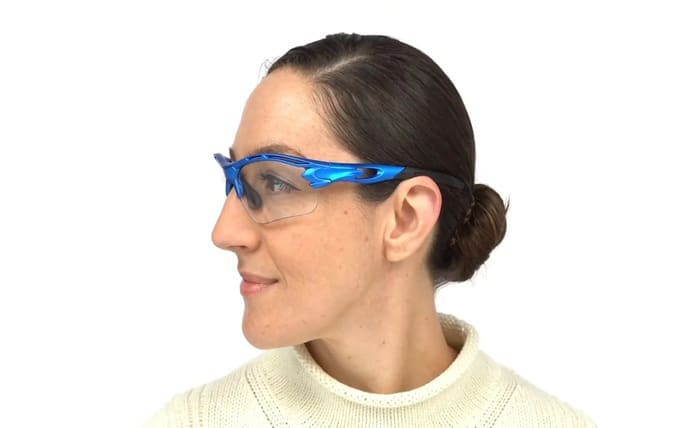
Regular eyeglasses can correct vision, but they are not necessarily designed for the demands of a shooting range. Prescription shooting glasses combine vision correction with protective features intended for environments where impact, debris, glare, and rapidly changing visual conditions can affect performance.
At the range, clear vision involves more than reading a target. Shooters need to distinguish sights or reticles, judge target details, maintain awareness of their surroundings, and keep their eyes protected throughout the session. For prescription wearers, eyewear needs to support all of these requirements without creating unnecessary visual or physical distractions.
Why Prescription Shooting Glasses Are Different
Regular prescription glasses are primarily designed for everyday activities. Their frames and lenses may provide excellent vision for driving, reading, or working, but they are not automatically suitable for an environment where eye protection is important.
Prescription shooting glasses are designed around a different set of priorities. Depending on the model and applicable safety standard, they can combine impact-resistant lenses, secure frame construction, side coverage, and prescription correction in one system.
This eliminates the need to rely on ordinary glasses as the primary protective barrier or to layer cumbersome protective eyewear over a prescription frame.
What Regular Eyeglasses May Lack
| Everyday prescription glasses | Purpose-built shooting eyewear |
| Primarily designed for vision correction | Designed around correction and eye protection |
| Limited impact protection depending on construction | Available with impact-rated lens and frame systems |
| May have narrow side coverage | Often provides greater coverage |
| Standard frame retention | Designed for stability during movement |
| General-purpose lenses | Options for glare and contrast management |
The exact protection offered depends on the eyewear’s certification and construction, so shooters should always verify the applicable safety rating rather than assuming every pair provides the same level of protection.
Impact Protection Is the First Priority
At a shooting range, eye protection needs to account for more than the direct line of sight. Spent cartridge cases, fragments, dust, and other debris can move unpredictably.
A pair of ordinary glasses may keep dust out of the eyes, but that does not automatically make them suitable protective eyewear. Safety-rated shooting glasses are specifically evaluated against defined impact requirements.
Why Certification Matters
When evaluating protective eyewear, look for:
- A clearly stated applicable safety standard
- Appropriate impact protection for the intended activity
- Secure frame construction
- Adequate lens coverage
- A prescription that has been accurately manufactured
Certification should be treated as a minimum requirement rather than an optional feature.
Optical Stability Matters on the Range
A prescription can be technically accurate yet still feel uncomfortable if the frame moves or the lenses sit incorrectly.
Shooters may need to focus between different distances, shift attention from the firearm to the target, or maintain visual awareness across a broad field. A frame that slides down the nose or shifts during movement can change the position of the optical centres and affect visual clarity.
Stable prescription shooting glasses help maintain a consistent relationship between the eyes and lenses. This can reduce distractions and make it easier to maintain comfortable vision during longer range sessions.
Frame Fit and Peripheral Awareness
A secure frame should remain stable without creating excessive pressure around the nose, temples, or ears. Side coverage can also be useful because potential hazards are not always directly in front of the wearer.
Good peripheral coverage allows the wearer to maintain broader environmental awareness while still keeping the lenses positioned correctly.
Lens Colour Can Affect Visual Performance
Not every shooting environment has the same lighting. Indoor ranges, outdoor ranges, bright sunlight, and overcast conditions can produce very different visual demands.
Matching Lens Options to Conditions
Different lens colours can influence contrast and perceived brightness:
- Clear: Useful when maximum light transmission is needed.
- Grey: Helps reduce brightness while maintaining relatively natural colour perception.
- Brown or amber: Can increase perceived contrast in certain outdoor conditions.
- Specialized tints: May be useful for specific lighting environments.
The appropriate choice depends on the range, weather, target background, and personal visual needs. Tint should never be selected solely for appearance.
Prescription Shooting Sunglasses for Outdoor Ranges
Outdoor ranges introduce another challenge: sunlight and reflected glare. Bright conditions can make targets harder to distinguish and increase squinting or eye fatigue.
Prescription shooting sunglasses can combine corrective vision with sun protection and glare management, making them particularly useful for daytime outdoor shooting.
For people who already rely on prescription eyewear, this can be more practical than switching repeatedly between ordinary prescription glasses and non-prescription shooting eyewear.
Why Strong Prescriptions Need Extra Attention
High prescriptions can make frame and lens selection more complicated. Thicker lenses may add weight, while incorrect frame geometry can increase edge distortion or create unnecessary pressure.
A suitable frame should accommodate the prescription while keeping the lenses properly positioned. Smaller or carefully designed frame dimensions can sometimes help control lens thickness and weight, although the appropriate solution depends on the individual prescription.
This is one reason choosing the best prescription shooting glasses should involve more than comparing frame appearance or price.
Prescription Shooting Glasses Online: What to Check
Buying prescription shooting glasses online can be convenient, but protective eyewear requires more careful evaluation than ordinary fashion eyewear.
Before purchasing, check:
- Your current prescription requirements
- The eyewear’s safety certification
- Lens material and impact rating
- Frame coverage and fit
- Available lens tints
- Compatibility with other required protective equipment
- Whether the prescription is suitable for the selected frame
A reputable provider should clearly communicate the protective specifications rather than relying on vague descriptions such as “durable” or “impact resistant.”
RX Safety Canada focuses on prescription protective eyewear for people who need vision correction in demanding environments. That specialized approach is particularly relevant when prescription accuracy and protective performance need to work together.
Don’t Overlook Comfort During Longer Sessions
Protective eyewear that feels fine for ten minutes may become uncomfortable after several hours. Pressure behind the ears, slipping frames, excessive weight, or poor ventilation can become distracting during an extended range session.
Comfort also has a practical safety benefit. When eyewear fits properly, the wearer is less likely to adjust it repeatedly or remove it unnecessarily.
A simple fitting test can help:
- Put the glasses on and adjust them normally.
- Turn your head from side to side.
- Look up and down repeatedly.
- Check for pressure around the nose and temples.
- Confirm that the frame does not slide.
- Wear them long enough to identify developing discomfort.
Prescription Eyewear and Overall Eye Protection
Prescription eyewear should be considered one part of a broader range-safety setup. Hearing protection, appropriate clothing, safe firearm handling, and adherence to range rules remain essential.
Eye protection is particularly important because vision cannot be replaced by simply improving another part of the safety system. The eyewear should be selected according to the hazards of the specific range and the shooter’s prescription needs.
The relationship between prescription correction and protective performance is also important beyond shooting. Similar principles apply when selecting prescription shooting glasses for eye protection, particularly when evaluating impact protection, lens coverage, and optical clarity.
The Bottom Line
Regular eyeglasses can provide excellent vision correction, but they should not automatically be treated as protective eyewear for shooting. The demands of the range make impact protection, secure fit, peripheral coverage, optical stability, and appropriate lens selection important considerations.
For prescription wearers, purpose-built prescription shooting glasses can bring these requirements together in one system. When the eyewear is selected according to the shooting environment, prescription strength, safety certification, and lighting conditions, it can provide clearer, more stable vision while supporting the level of eye protection expected at the range.